
Everything you need to know about FUE and DHI hair transplant, recovery, results and who isa good candidate – explained by the team at Dermacode, Vesu, Surat.
Thinning at the temples, a widening parting, or a receding hairline can quietly chip away at yourconfidence. If medicines and topical treatments are no longer enough, a hair transplant is one of themost reliable ways to restore hair that looks natural and lasts. At Dermacode, Vesu, Surat, hairtransplant is performed under the guidance of Dr. Parth Thakkar (MD Dermatology), a skin and hairspecialist with experience in advanced FUE and DHI techniques and GFC therapy.
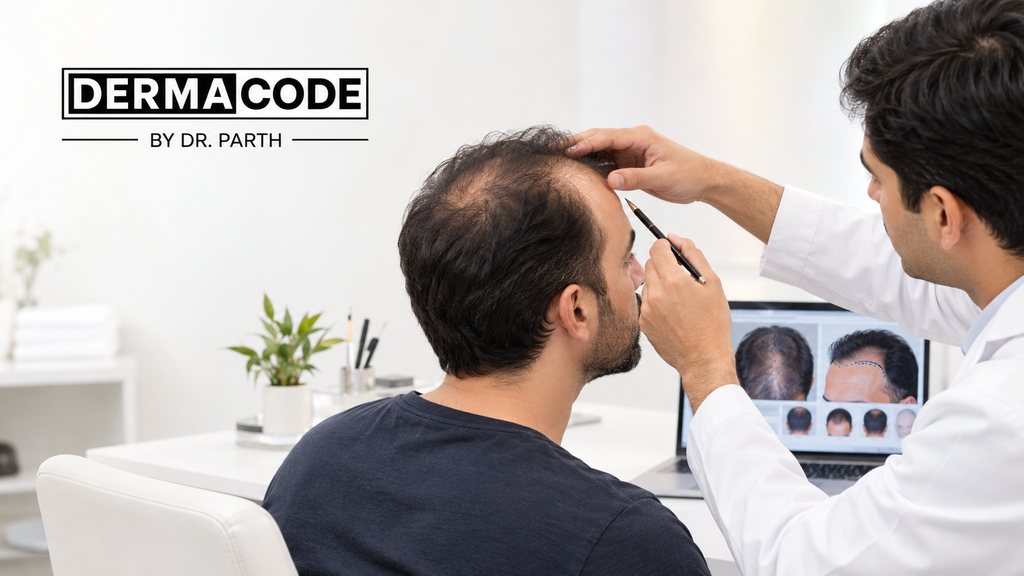
What Is a Hair Transplant?A hair transplant is a minor surgical procedure in which healthy hair follicles are taken from a donor area -usually the back or sides of the scalp, where hair is genetically resistant to balding – and placed intothinning or bald areas. Because these follicles keep their original characteristics, the transplanted hairgenerally continues to grow for life.
Why Does Hair Loss Happen?Hair loss has many causes, which is why a proper diagnosis by a dermatologist matters before anyprocedure:• Androgenetic alopecia (male and female pattern baldness) – the most common cause, driven bygenetics and hormones• Stress, illness or nutritional deficiencies – often cause temporary shedding rather than permanentloss• Thyroid and hormonal imbalances, including PCOS in women• Scalp conditions and scarring from injury, burns or surgeryGood to know: A hair transplant works best when the cause of hair loss is identified and stable. Aconsultation with a dermatologist comes first – not every case needs surgery.
FUE vs DHI — Key DifferencesFUE (Follicular Unit Extraction)Individual follicles are extracted using a micro-punch.Small channels are created first, then grafts are placed.Best suited for larger bald areas requiring more grafts.Offers precise graft placement with tiny dot-like marks after healing.Short downtime — most patients return to routine work within a few days.
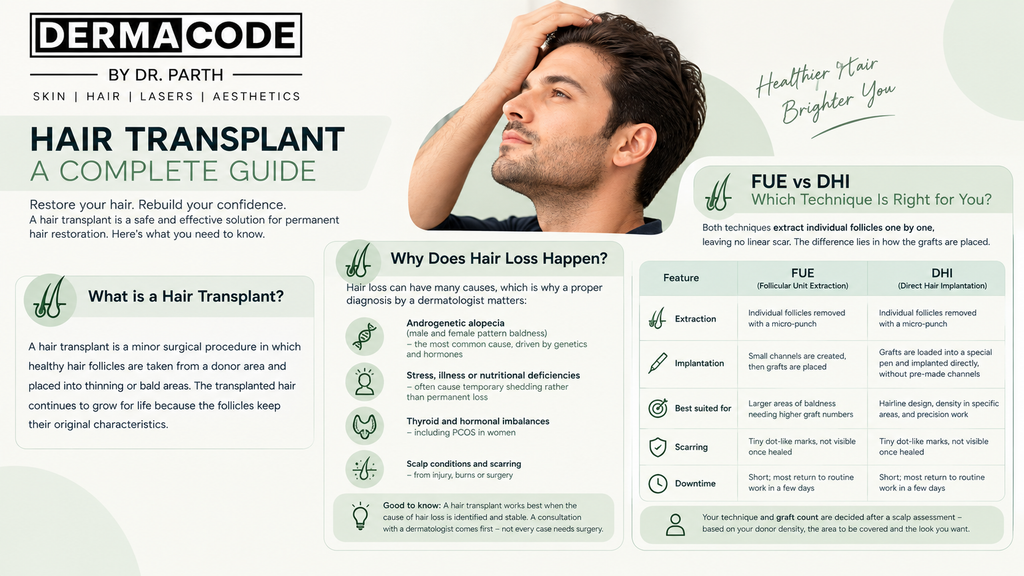
DHI (Direct Hair Implantation)Individual follicles are extracted using a micro-punch.Grafts are loaded into a special implantation pen.Grafts are implanted directly, without pre-made channels.Best suited for hairline design, targeted density and precision work.Short downtime with tiny dot-like marks after healing.
Which is right for you?Your technique and graft count are decided after a scalp assessment, based on your donor density, the area to be covered, and your individual hair-restoration needs.
Who Is a Good Candidate?• Adults with stable, pattern-type hair loss• Good hair density in the donor area at the back and sides of the scalp• Realistic expectations about density and timelines• Good general health, with no active scalp infection or uncontrolled medical conditionsThose with very early or rapidly progressing hair loss may first be advised medical treatment, and atransplant later once the pattern settles.The Hair Transplant Procedure, Step by Step1. Consultation & scalp analysisYour dermatologist examines your scalp, identifies the cause of hair loss and plans the hairline and graftcount.2. Local anaesthesiaThe donor and recipient areas are numbed, so the procedure is comfortable.3. Follicle extractionHealthy follicles are harvested one by one from the donor area.4. ImplantationGrafts are placed at the correct angle, direction and depth to match your natural growth pattern.5. Aftercare guidanceYou go home the same day with clear instructions for washing, sleeping and medication.
Recovery Timeline: What to Expect
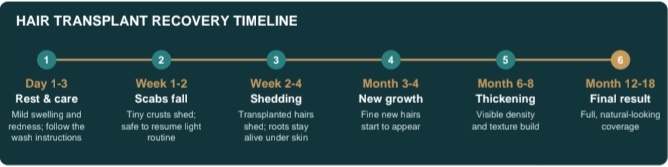
Shedding of the transplanted hair in the first weeks is completely normal – the follicles remain in the scalpand begin producing new hair from around the third or fourth month. Final results usually take 12 to 18months.
Aftercare Tips for Better Results• Sleep with your head slightly elevated for the first few nights• Avoid touching, scratching or rubbing the transplanted area• Follow the prescribed washing routine – do not wash aggressively• Avoid direct sun, swimming pools, heavy workouts and smoking as advised• Take medicines exactly as prescribed and attend all follow-up visits
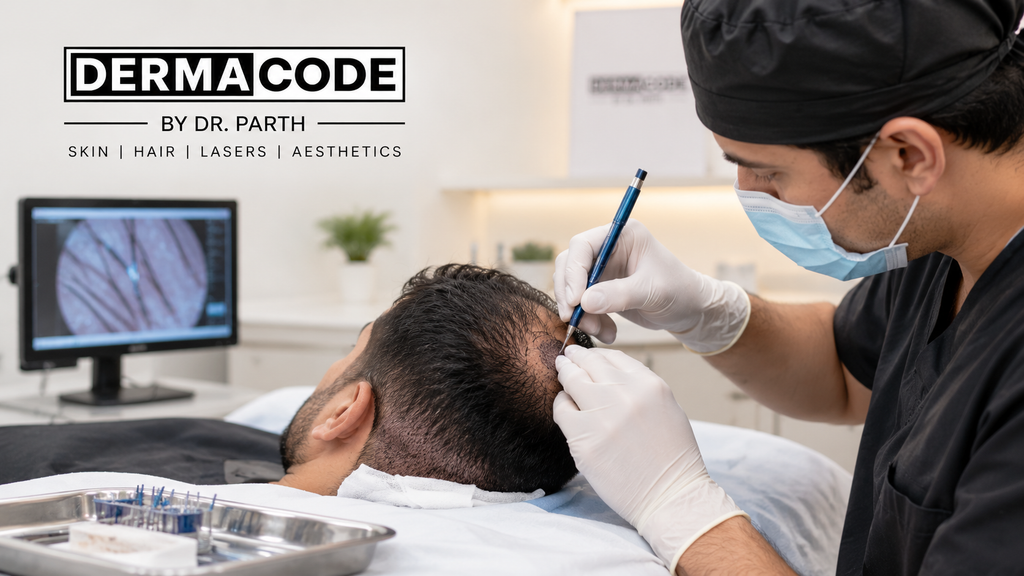
GFC Therapy: Supporting Your Hair TransplantGFC (Growth Factor Concentrate) therapy uses growth factors from your own blood to nourish hairfollicles and support healthier, stronger hair. At Dermacode it is offered as part of hair restoration care,either on its own for early thinning or alongside a transplant to support the existing hair. Yourdermatologist will advise whether it suits your case.
Why Choose Dermacode for Hair Transplant in Surat?• Dermatologist-led care – Dr. Parth Thakkar, MD Dermatology, with prior experience at Kiran Hospitaland Kaya Clinic• Advanced techniques – FUE and DHI hair transplant with GFC therapy support• Personalised planning – hairline design and graft planning tailored to your face and hair type• Complete hair and skin care under one roof – from diagnosis to aftercare• Convenient location – Solaris Kode, VIP Road, Vesu, Surat
Frequently Asked QuestionsIs a hair transplant permanent?Transplanted hair is taken from areas resistant to balding, so it generally lasts a lifetime. Non-transplantedhair may still thin over time, which is why a long-term plan matters.Is the procedure painful?It is performed under local anaesthesia, so most people feel only mild pressure. Some sorenessafterwards is managed with prescribed medication.
When can I return to work?Many people resume desk work within a few days, though this depends on the technique and yourdermatologist’s advice.Will the result look natural?When the hairline, angle and direction are planned carefully, results blend with your existing hair.Can women get a hair transplant?Yes, suitable candidates include women with pattern thinning or a widening parting. A proper diagnosiscomes first.How many grafts will I need?It depends on the area to be covered and your donor density. You will get an estimate after your scalpassessment.
Book Your Hair Transplant ConsultationMeet Dr. Parth Thakkar at Dermacode for a scalp assessment and a personalised hair restorationplan.Dermacode – By Dr. Parth201, 2nd Floor, Solaris Kode, Beside Shyam Temple, VIP Road, Vesu, Surat, Gujarat 395007