
A dermatologist-led guide to melasma, dark spots and uneven skin tone – and howDermacode, Vesu, Surat plans safe, realistic pigmentation treatment for Indian skin.
Dark patches on the cheeks, spots left behind by acne, an uneven tone that makeup cannot quite hide -pigmentation is one of the most common reasons people visit a dermatologist, and one of the mostmisunderstood. The right treatment depends entirely on what type of pigmentation you have and whatis causing it. At Dermacode, Vesu, Surat, every plan begins with a proper diagnosis by Dr. ParthThakkar (MD Dermatology), because treating the wrong type the wrong way can make pigmentation worse.
What Causes Pigmentation?
Pigmentation happens when the skin produces excess melanin in certain areas. Common triggers include:• Sun exposure – UV light is the single biggest driver of dark spots and melasma
• Hormonal changes – pregnancy, contraceptive pills and thyroid or PCOS-related shifts, especially inmelasma
• Inflammation – acne, rashes, burns or irritation leaving dark marks behind (post-inflammatoryhyperpigmentation)
• Skincare and cosmetic irritants – harsh products, over-exfoliation or unsupervised treatments
• Genetics and skin type – deeper skin tones are naturally more prone to pigmentation
Good to know: Indian skin produces pigment more readily after heat, irritation or aggressivetreatment. That is why gentle, correctly sequenced care and strict sun protection matter as much asthe treatment itself
Pigmentation Types at a Glance
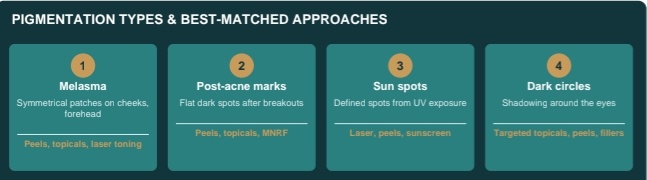
Treatment Options Available at Dermacode
Dr. Parth Thakkar selects from these based on your diagnosis, skin type and how your skin responds:
Prescription topical therapy – Medical-grade creams that slow pigment production and help lightenexisting marks. This is the foundation of most plans, particularly for melasma.
Chemical peels – Controlled, medical-grade peels that speed up cell turnover and fade surfacepigmentation, often used in a gentle series for Indian skin.
Laser toning – Low-energy laser sessions that break down excess pigment gradually. Suitability andsettings are decided individually, since the wrong approach can trigger rebound pigmentation.
Microneedling-based treatments – Used selectively, to improve tone and texture and to help activeingredients work better, particularly for post-acne marks.
Daily sun protection – Not an add-on but a core part of treatment. Without it, results fade andpigmentation returns
How Dermacode Plans Your Treatment1. Skin analysis & diagnosisDr. Parth Thakkar identifies the pigmentation type, depth and triggers, including hormonal orproduct-related causes.
2. Skin preparationYour skin is prepared with the right topicals and sun protection before any procedure begins.
3. Staged treatmentPeels or laser sessions are spaced weeks apart, so skin heals fully between visits.
4. Maintenance plan-A home-care and sun-protection routine keeps results from fading or relapsing.
How Long Does Treatment Take?
Post-acne marks and sun spots often improve within a few weeks to months. Melasma is different: it is a
Aftercare Essentials
Apply a broad-spectrum sunscreen every day, and reapply when outdoors
• Avoid picking at spots or scrubbing treated areas
• Pause harsh actives and exfoliants unless your doctor approves them
• Wear a hat or use shade during peak sun hours
• Use only the products prescribed for your skin, and attend follow-up visits
Why Choose Dermacode for Pigmentation Treatment in Surat?
• Diagnosis before treatment – the pigmentation type is identified first, not guessed
• Skin-tone aware planning – protocols chosen with Indian skin and rebound pigmentation risk in mind
• Combination approach – topicals, peels and laser used together where suitable DERMACODE Skin | Hair | Lasers | AestheticsDermacode – By Dr. Parth | 201, 2nd Floor, Solaris Kode, VIP Road, Vesu, Surat 395007 Page 3
• Led by Dr. Parth Thakkar, MD Dermatology – with prior experience at Kiran Hospital and Kaya Clinic
• Convenient location – Solaris Kode, VIP Road, Vesu, Surat
Frequently Asked Questionse
Can pigmentation be removed permanently?
Some types, like post-acne marks, can fade very well. Melasma can be controlled but may return with sunor hormonal triggers, so ongoing care is part of the plan.
Why did my pigmentation get worse after a treatment elsewhere?
Heat, irritation or aggressive settings can trigger rebound pigmentation in Indian skin. A proper diagnosisand gentle, staged approach reduces this risk.
Is laser toning safe for Indian skin?
It can be when the settings and number of sessions are chosen carefully by a dermatologist. It is notsuitable for every pigmentation type, which is why assessment comes first.
Do I still need sunscreen after treatment?
Yes. Sun exposure is the biggest reason pigmentation comes back, so daily sunscreen is essential.
How many sessions will I need?
It depends on the type and depth of pigmentation. Dr. Parth Thakkar will recommend a plan after your skinassessment.
Book Your Pigmentation ConsultationMeet Dr. Parth Thakkar at Dermacode for a proper pigmentation diagnosis and a personalised,skin-safe treatment plan.Dermacode – By Dr. Parth201, 2nd Floor, Solaris Kode, Beside Shyam Temple, VIP Road, Vesu, Surat, Gujarat 395007